The Future is Regenerative.
billy shows where your money goes. parley helps neighbours look after each other and the land. Together: a humane future, not an extractive one.
billy
Type a brand. See who owns it, with the source. Find somewhere closer to buy.
parley
Ask your neighbours how your place is really doing. Then fix it together.
Remember the ozone layer?
1987. A hole was opening in the ozone layer, the shield that protects all life from the sun. Every country on Earth signed on to stop the chemicals causing it, the first UN treaty ever to get everyone. About 99% of those chemicals are gone, and the ozone layer is on track to heal by around 2040 over most of the world.
See. Switch. Build.
Most apps stop at step one. We go all seven.
see
Who owns it, with the source and the date.
switch
Spend closer. Buy once. Get it fixed.
gather
Your neighbours, not your feed.
decide
Find what the whole room agrees on.
pool
Your money, your vote, every receipt public.
build
Tool libraries. Fridges. Repair nights.
link up
Town to town. Coming next.
Oligarchy isn't working
We did away with kings because luck shouldn't decide how society works. Big companies quietly take money out of your community. billy shows where it goes, from public records, with the source and the date: who they lobby, what for, and how those politicians voted.
12 people
The 12 richest people hold more wealth than the poorest half of humanity, over 4 billion of us. Billionaire wealth grew $2.5 trillion in 2025 alone.
1% = two thirds
The richest 1% cause as much climate pollution as the poorest two thirds of the world, about 5 billion people. The longer wealth piles up at the top, the faster the planet heats.
Bunkers
Some of the richest are building underground bunkers to ride out the end of the world. That's not a future. It's a cell. We think the future is regenerative and diverse: many systems, built together, not one way out for a few.
Follow Your Money
Scan a brand. See who really owns it, who they lobby, and how politicians voted.
Redirect
Co-ops, worker-owned and local shops, right next to the big brand. parley's map adds repair shops, makerspaces, second-hand and refill.
Take Action
Show your receipts. Vote together on demands. Make extractive companies answer to you. It only works if we keep it going, together, and push companies to think generations ahead, not just to next quarter.
picture 20,000 members in one city
moved every month from big chains to local, independent and co-op shops
- a boycott that worked9,000 members left a grocery chain. It met both demands, and the campaign closed with the receipt.
- a bakery that doubledA family bakery showed up next to a chain brand, and its regulars doubled in three months.
- a co-op that openedEnough members promised to switch that a new grocery co-op opened on the east side.
try it. type a brand you bought this week.
docs/shots/billy-1.png
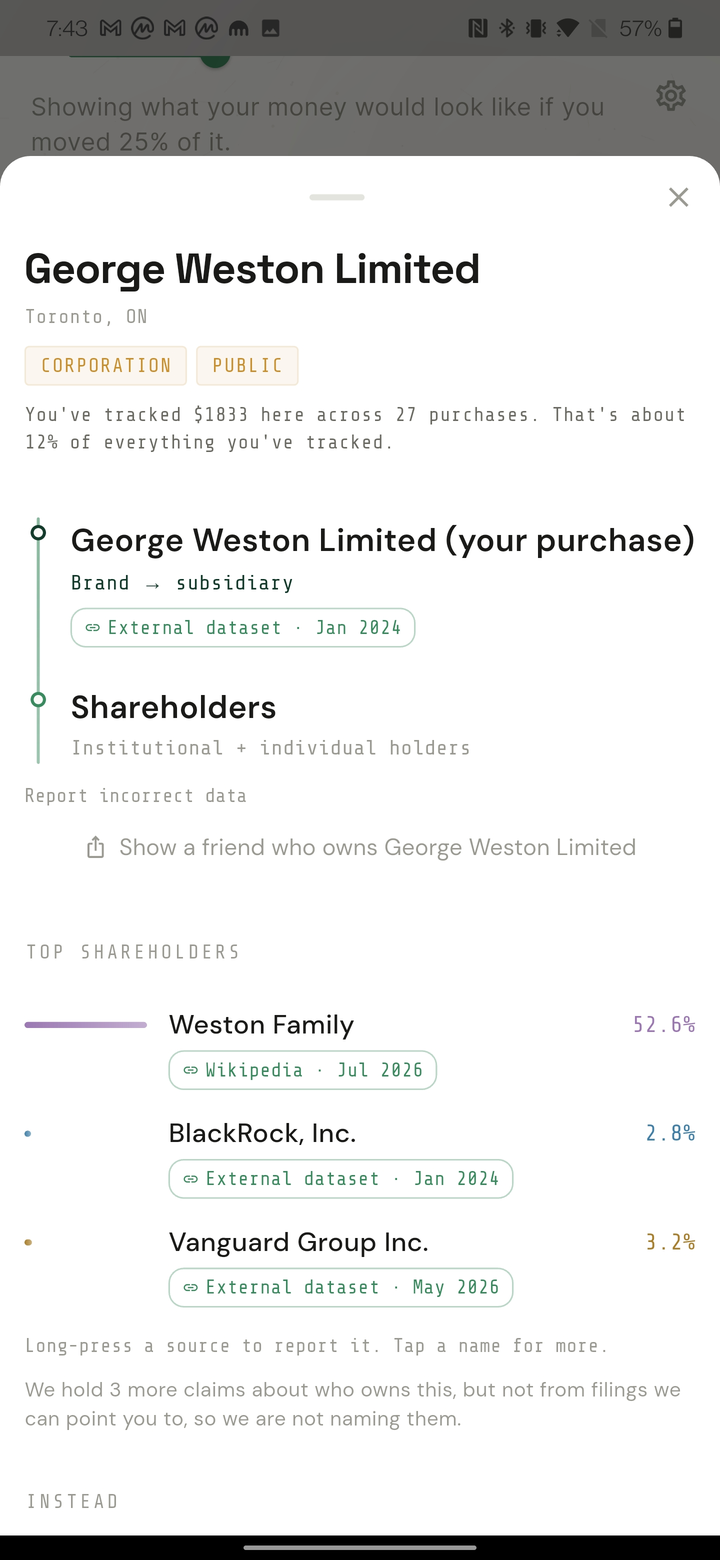
docs/shots/billy-2.png
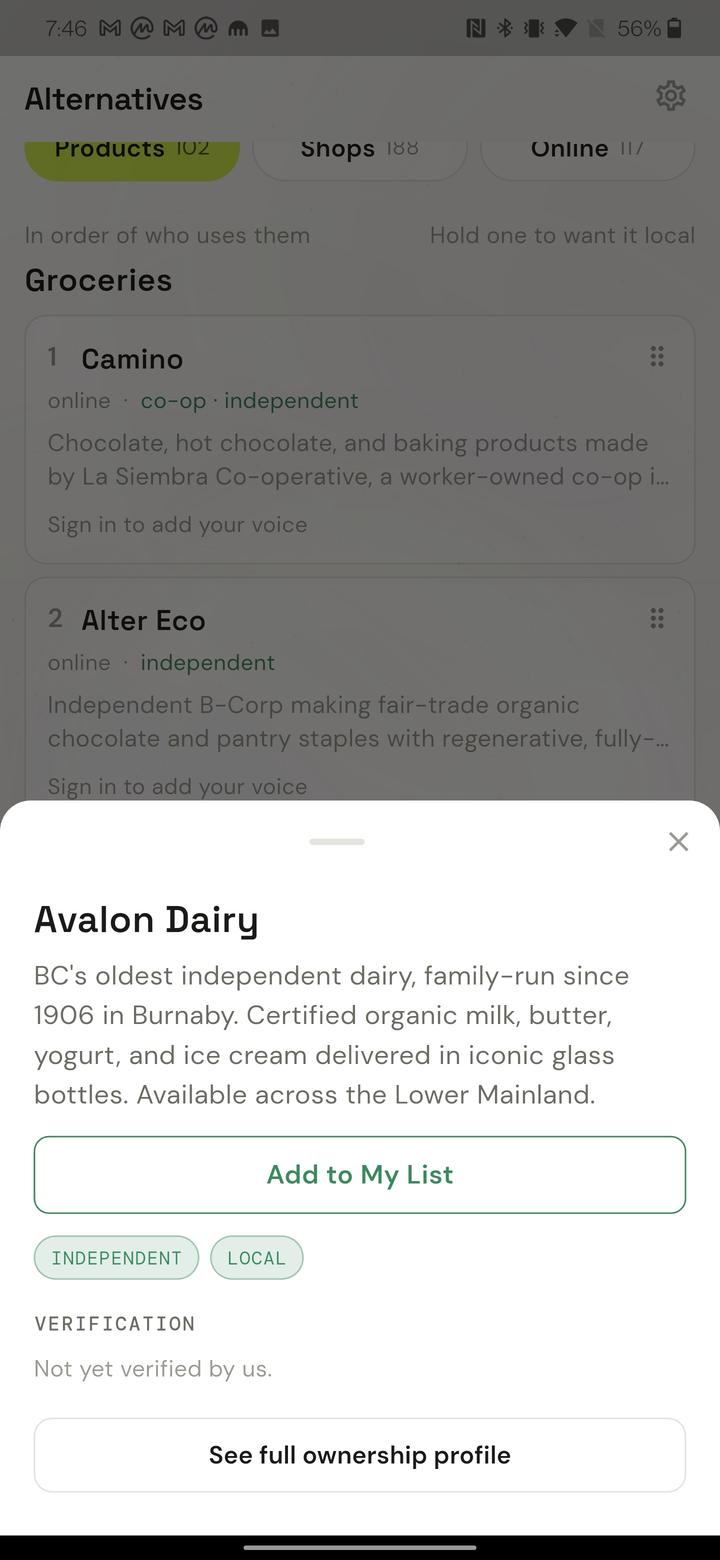
billy is free. Pro is $2.99 USD a month and adds bank linking, for people who want to see where their money actually went.
Clarity Precedes Action
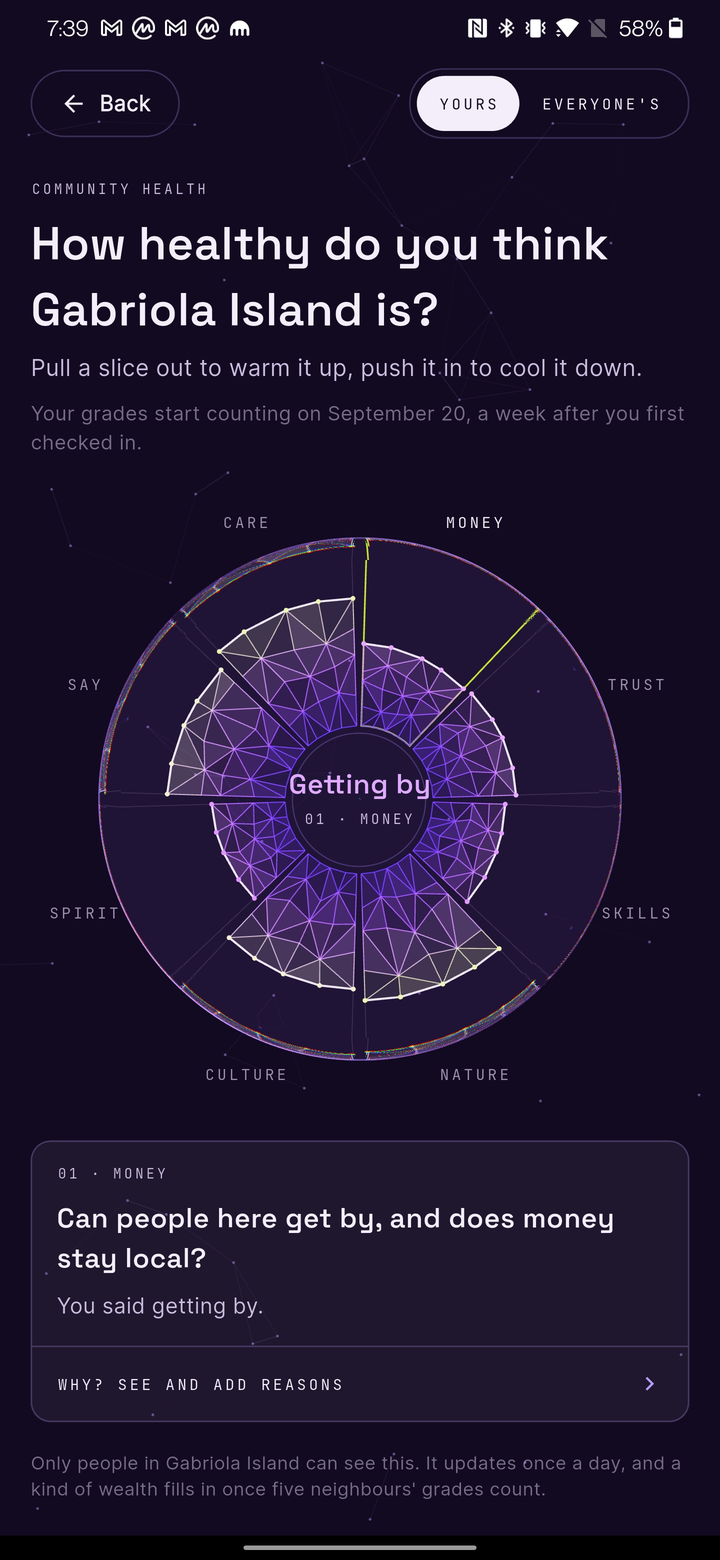
Money isn't the only wealth. Grade your place on care, trust, nature and more. Then tend to it, together.
go on, grab a slice and pull it out. on a phone, press and hold it first.
dig deeper into parley →Clarity
Care, money, trust, skills, nature, culture, spirit and agency. Grade each one for where you live. Only people there can see it, and nothing shows until five neighbours have graded.
Action
When we all focus on our community needs, action happens naturally. Regeneration starts here.
Alliances
Using the Pol.is Consensus Protocol. Work within our communities and even other communities to help where we need help. You can pool community resources and decide on what to spend money on democratically.
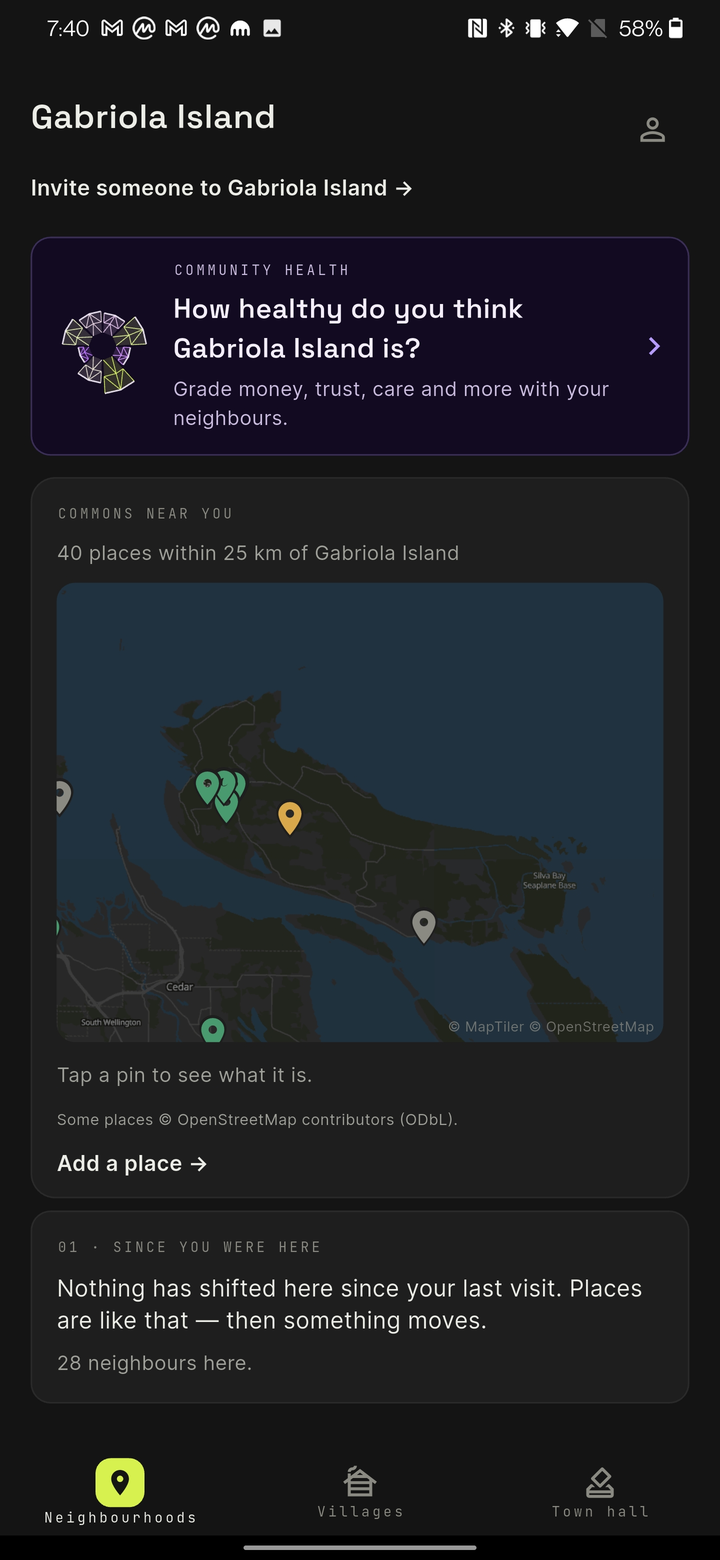
picture one neighbourhood, a year in
funded and built by neighbours, and voted on in the open
- old cars, made electricLocal mechanics swap the engines in old cars for electric motors. Neighbours keep the car they have and stop buying gas.
- solar over the parking lotPanels now roof the grocery store lot. Cars park in the shade, and the power runs the store and the street lights.
- a food forestAn empty lot became fruit and nut trees. Anyone can pick, and the school down the street plants with them.
docs/shots/parley-1.png
docs/shots/parley-2.png
On the App Store now. Google Play is coming soon.
The power is ours.
We are a BC benefit company: people and the land before profit, written into law. Built to be run by the people who use it. Regeneration, not extraction.
No venture capital. No ads. No selling your data. Members keep this alive, and members decide where the money goes.
chip in ♥Is my data private?
Yes. You can look up any brand in billy without an account. A lookup sends the barcode or the name, nothing else. There are no ads and we don't sell your data. Bank linking is opt-in and handled through Plaid, so your banking login never touches us, and your data is deleted when you disconnect.
Who's behind this?
billy and parley are made by a small BC benefit company founded by Jason. They're built on public records with a public corrections policy. No advertisers or investors sit in the middle.